Autumn Interrail 2024 — Story #6
Taken directly from my travel journal
🎵 Theme song of this story: Go West by Pet Shop Boys
The train from Athens to Thessaloniki hummed like a tired animal – steady, heavy, determined. I was standing between the carriages, leaning my forehead against the window, the glass cool against the heat. My body was radiating from two hours of broken sleep. Outside, Greece stretched out in dusty olive groves, dry hills, and lonely farms that flickered past like frames of a film slightly too slow for the projector.
The sun rose with theatrical timing.
A soft peach glow behind the mountains, then pale yellows slipping across the fields. The kind of sunrise you only catch from a train: slow, gentle, unbothered by the passengers inside, who were probably just as tired as I was.
My gaze drifted without actually seeing anything. Exhaustion does that. It turns every view into a watercolor.
I reached for my phone.
Black screen.
Dead as a rock.
There really is no fixing that.
It had survived just long enough in the morning to activate my Interrail pass – one final heroic act – then slipped into a coma it never woke from. I tapped it. Shook it. Whispered a gentle curse. Nothing.
We rolled into Thessaloniki under a warm late-morning haze. My travel buddy Job and I hugged goodbye – he was staying one more day – and I stumbled into a random café near the station, dragging my backpack like a defeated soldier. I opened my laptop, the only remaining device linking me to the world, and stared at it with the determination of someone who desperately wants their life to make sense again.
I needed to get to Sofia.
I needed a plan.
I needed… sleep, probably.
I needed home. It was what I’d been lacking. Forever in this constant battle between the longing for freedom, and longing for belonging. And at this moment, in all fairness, I had neither.
I bought a Flixbus ticket to Sofia and boarded the next one out, clutching my laptop like a compass.
SOFIA: Five Days of Chaos, Heart, and Resetting
Sofia greeted me with cool air and the familiar scent of my city – damp pavements, roasted sunflower seeds, cigarette smoke drifting from balconies, the hum of trolleybuses at night. I collapsed in bed. No dramatic moment. No deep thoughts. Just plop and darkness.
The next morning, I was running a Nonviolent Communication and Radical Honesty event with my colleague Kris.
Funny how 12 hours before, I was on a train somewhere between Athens and Thessaloniki contemplating my life. Now I was explaining empathy, honesty, and needs-based communication to a warm, curious group of people.
NVC teaches us to speak without blaming.
Radical Honesty teaches us to speak without filtering.
Together, they create this weird blend of vulnerability and bravery – like taking your heart to the gym.
The days that followed were a blur:
• wandering the city in search of a phone replacement
• cooking dinners with Job in my tiny apartment, who had arrived in Sofia a day after me
• meeting mutual friends
• laughing, eating, grounding myself again in the familiar
• a lightning trip back to Montana to vote and return the same day
Then Job left for Istanbul = two days of trains, mosques, chaos, and baklava. Classic him, he had left with no warning, just bluntly told me “My train is in two hours.”
I was quite frustrated at him – he ditched me in Sofia to travel, and I was rotting in the Bulgarian capital waiting for his return so we could continue. I wanted to go, and I wanted it badly.
By the time he returned, I was ready to leave again. We met at Sun & Moon café – warm wooden tables, the smell of sourdough, sunlight dripping through dusty windows. We sat down with intention.
“I want to go to Serbia,” he said. Another headshot.
“I really don’t,” I replied. “I’m heading to Bucharest and then West.” I had made up my mind, planned my itinerary, and I was ready to continue solo if needed. Of course, I’d prefer his company – always.
We stared at each other like two strategists on opposite sides of a map.
Eventually: compromise.
He’d stay for our friend Eva’s graduation.
I’d leave in the morning, keys left in his hands.
We’d reunite in three days in Budapest.
Agreement sealed with herbal tea.
SOFIA SEVER → RUSE → BUCHAREST
At 6:30 the next morning, Sofia Sever station was drenched in pale blue dawn. There’s a specific chill at that hour – the kind that hints at both fatigue and possibility. My seat reservation cost 1 leva. One. The price of a cheap candy bar.
The train to Ruse was long and slow, but Bulgaria is generous with beauty when seen from a carriage window.
Rolling mountains covered in thick, dark pine.
Wide-open plains in golden tones.
Villages with red-tiled roofs huddled around crumbling churches.
Fields that glowed like molten honey in the sun.
It’s a landscape that expands inside you.
I arrived in Ruse at 13:30 and boarded the train crossing the Danube. The bridge rattled beneath us, and for a moment the river shimmered like a thick silver band under the sky.
At the border, the conductors collected our passports, and that’s when I noticed him:
a 98-year-old Norwegian man with an Interrail pass, traveling with his wife as calmly as if they were taking a stroll.
“I’m going to Copenhagen,” he said, “to buy a boat.”
A boat. At ninety-eight.
Legend.
Everyone else on the train was an interrailer too – backpackers, students, retirees, wanderers. A moving tribe. My kind of people.
Here I was, a lone traveler in a train of other travellers.
Bucharest greeted me at 17:30 with warm air and traffic that felt like organized anarchy. My friend was waiting on the platform. We headed to the Old Town, where cafés spilled onto cobblestones and lights hung like constellations above our heads. I met his Spanish flatmate. We wandered to the Palace of the Parliament – massive, absurd, almost unreal in scale. And then… supermarket sushi. Don’t judge us.
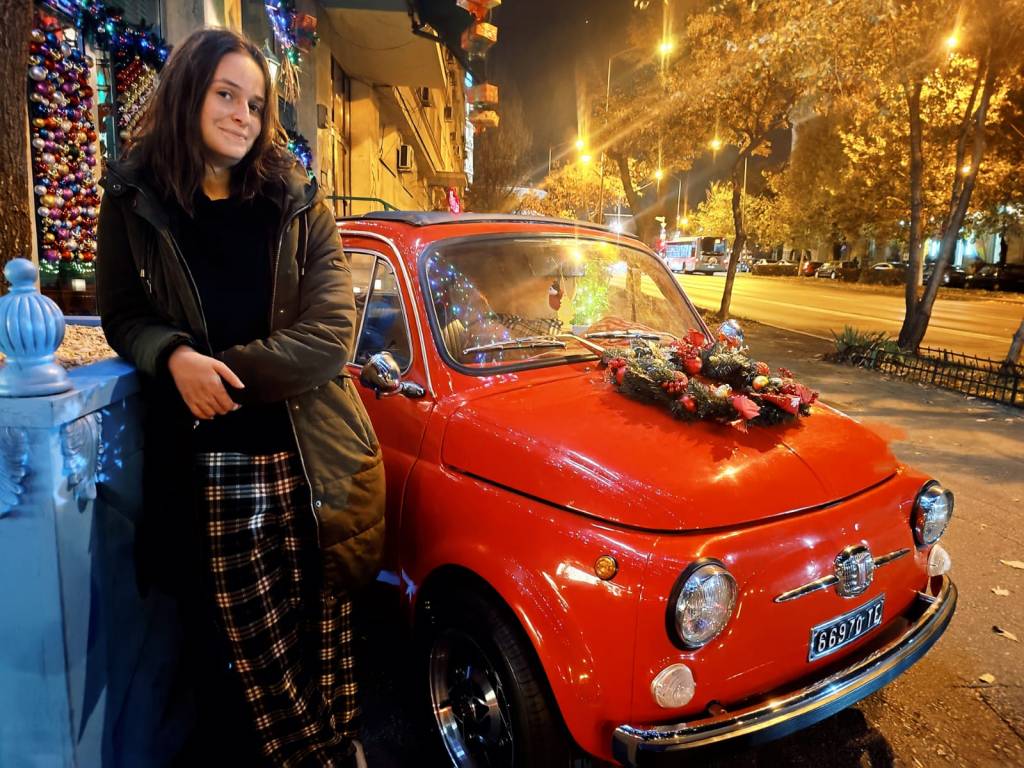
The next morning, after nine glorious hours of sleep, we visited the National Museum of Art.
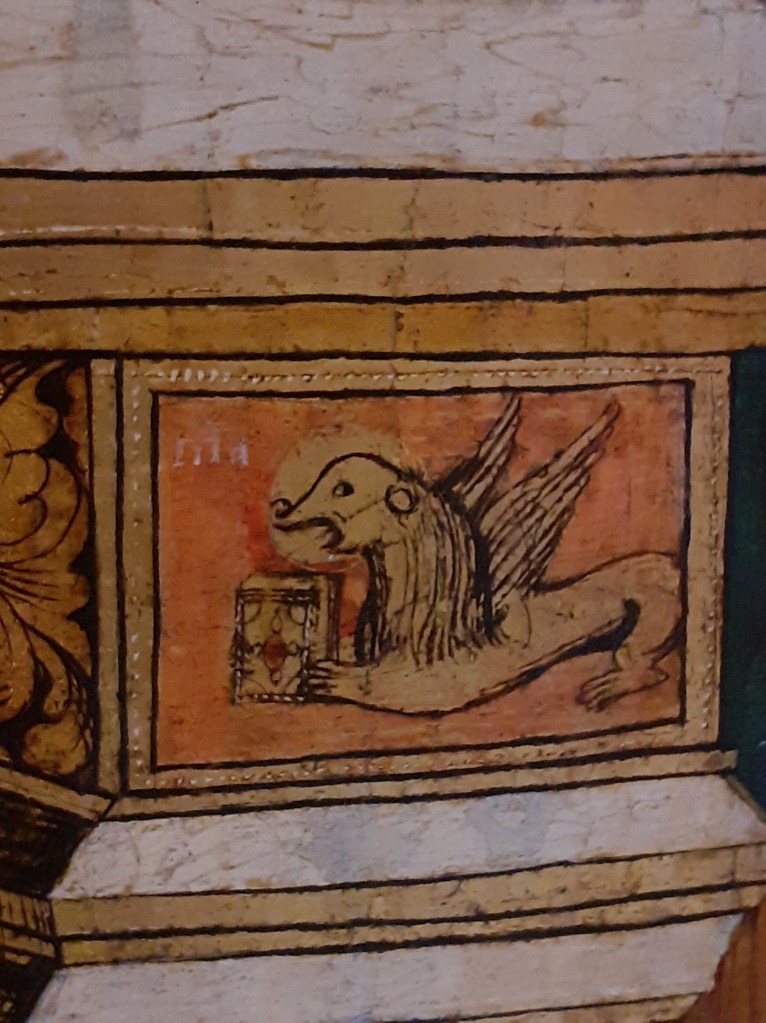
Medieval rooms filled with solemn saints staring at you like they know everything.
Renaissance rooms with dramatic folds of fabric and halos made of gold.
Modern sections full of bold colors and defiant brushstrokes.
And a painter – Theodor Aman, whose works felt like windows into quiet moments of Romanian life. I really liked his work.
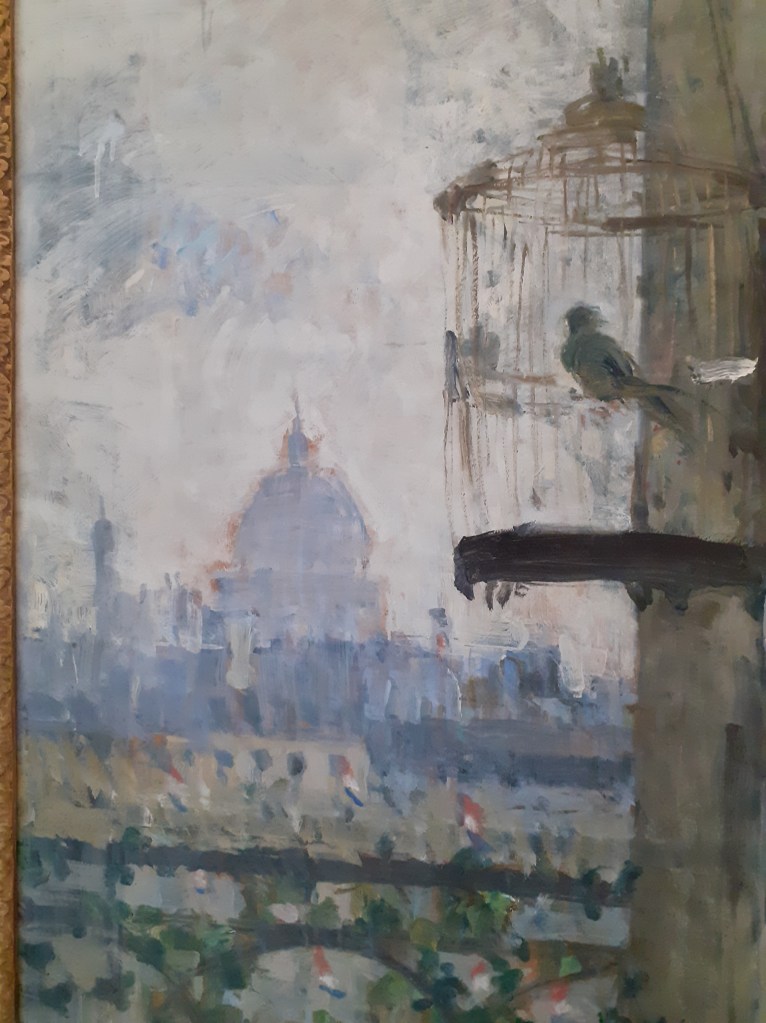
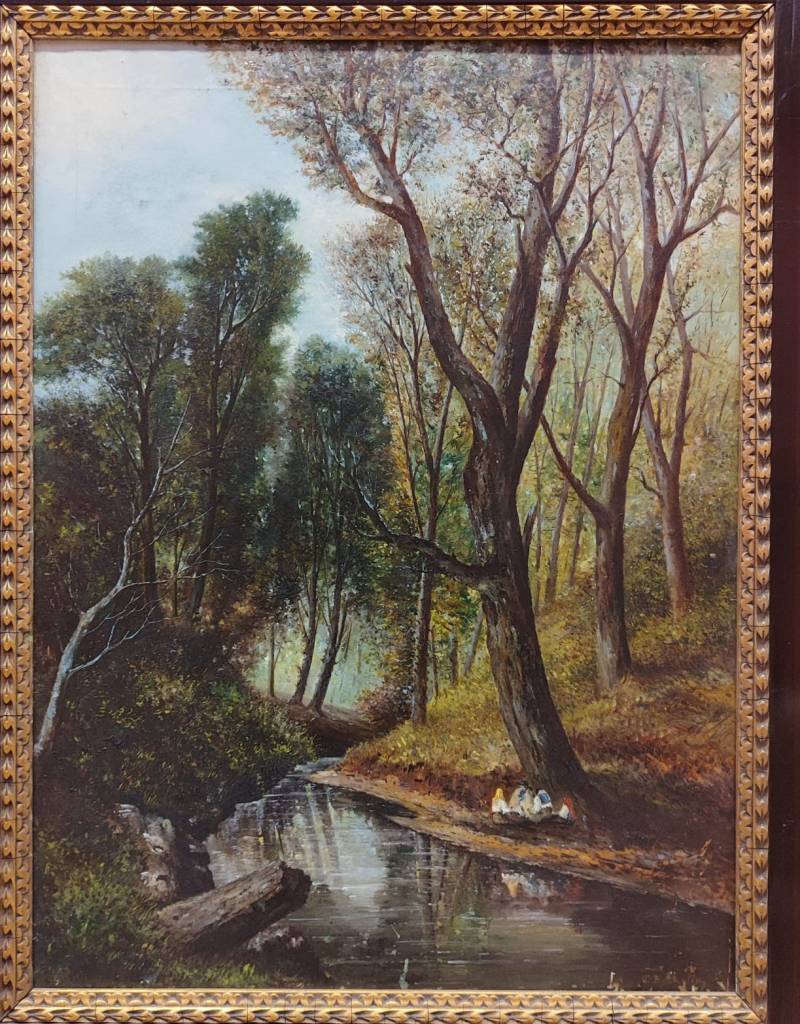
Medieval art, however, is quite peculiar. This is more or less it in a nutshell:
We ate sandwiches outside, laughed about nothing, and they walked me to Bucharest West station.
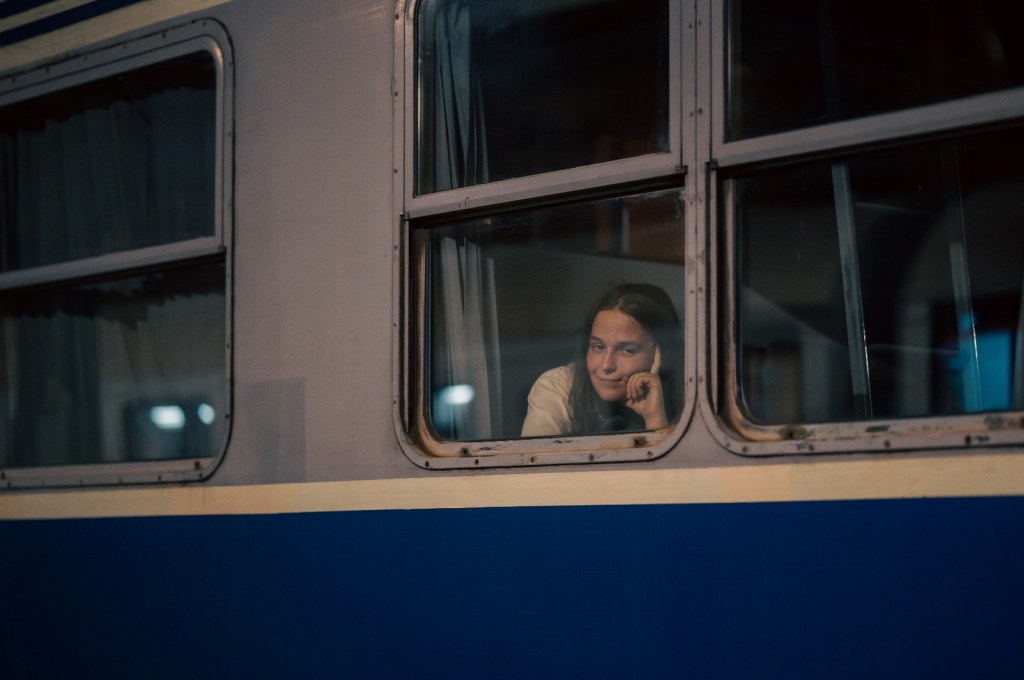
That would be me, boarding the night train from Bucharest to Budapest
THE NIGHT TRAIN TO BUDAPEST
My sleeping car looked like something from a 1960s film: wooden walls, chrome edges, little foldable tables, and a tiny nightlamp glowing like a firefly.
I shared the compartment with Andrei, a sailor who was visiting Budapest for work – and for love. He had promised his wife a romantic trip there. I hoped he’d keep that promise. He seemed like the type who would.
When night fell, I lay in my bunk listening to the low hypnotic rhythm of the rails. Outside, there was nothing but darkness and the occasional silhouette of a tower or a forest. I imagined castles, mountains, wolves, ghosts – whatever could fill the void.
Around 5 am, the Hungarian police knocked. Passport check.
One officer saw my Bulgarian ID and lit up immediately.
“Svilengrad!”, he said.
“Svilengrad?”, I asked.
“Yes! I used to live there! That’s in Bulgaria!”
It was, although I didn’t even know where to find it on the map.
After the police left, I stayed awake, watching the sky gradually fade from black to deep blue to pale grey. Trees whipped past like brushstrokes. The air felt colder. New country, new rhythm.
ARRIVAL IN BUDAPEST
We reached Budapest just after 9.
Keleti station rose before me – its majestic façade, the huge iron-and-glass arch, the sense of entering a city with layers upon layers of history.
The moment I stepped out, I could feel the shift toward Western Europe:
cleaner streets, wider sidewalks, grand boulevards, organized trams humming along their tracks.
Everything felt intentional.
I bought a ticket for the 73 bus but had absolutely no idea how to validate it. Typical traveler moment. Turns out Hungarians use an app. Good for them. Not so good for me at 9:15 in the morning.
But it didn’t matter.
I was in Budapest.
My travel buddy was somewhere nearby.
My Interrail adventure was alive again.
The city smelled like fresh pastries and winter air.
And for the first time in days, I felt fully awake.
TRAVEL NOTES
Transport & Routes
- Train: Athens → Thessaloniki
Early morning departure, golden sunrise, one of the few functioning long-distance trains in Greece. - Bus: Thessaloniki → Sofia (Flixbus)
Last-minute booking at the station café. - Train: Sofia Sever → Ruse
Reservation: 1 leva (~€0.50). Long, slow ride through beautiful Bulgarian countryside. - Train: Ruse → Bucharest
Passport collection at the border. Almost all passengers: Interrailers.
Memorable encounter: 98-year-old Norwegian man traveling with his wife from Istanbul → Copenhagen to buy a boat. - Train: Bucharest West → Budapest (night train) for about €25 to book a 4-bed couchette.
Two-bed sleeping cabin. Wooden, old, cozy.
Border control at around 05:00 – Hungarian police check IDs.
LESSONS LEARNED
1. Your phone can (and will) die at the worst possible moment.
Activate your Interrail pass early, keep a screenshot of your ticket, and remember: cafés in Thessaloniki make excellent crisis headquarters.
2. Returning home mid-trip isn’t failure – it’s strategy.
Sometimes you need a Sofia reset: new phone, clean clothes, NVC session, grounding with friends, and a reminder that your life still exists somewhere.
3. Trains reveal a gentler version of Bulgaria.
If you ever forget why you love this country, take the Sofia → Ruse route. The fields, the forests, the red-roof villages, the storks, they put everything back into place.
4. Interrailers are a tribe. You’ll meet them everywhere.
Especially 98-year-old Norwegians casually crossing continents to buy boats. Age is clearly optional.
5. Bucharest is best experienced through art and supermarkets.
Visit the National Museum of Art, admire Theodor Aman, then eat sushi from a plastic tray. Balance.
6. Night trains teach you patience, softness, and trust.
Wooden walls, gentle creaking, unexpected cabinmates with stories, border police at 5 AM. You surrender to the rhythm and let the journey carry you.
8. Travel partnerships require negotiation.
Bucharest vs. Serbia. Leaving vs. staying. Keys exchanged, routes diverging, meetings planned. A reminder that traveling together is as much about communication as movement.
9. You can plan an entire cross-continental route on two hours of sleep.
Should you? Absolutely not.
Can you? Apparently yes.
Enjoy the Trainhopper stories? Subscribe for more!
 Trainhopper
Leave a comment